Software Providers Forge Connections Between Mobile Access, Secure Payments, and Variant Incentives in Digital Table Games
Written by Viktor Long · Aug 5, 2026
Software Providers Forge Connections Between Mobile Access, Secure Payments, and Variant Incentives in Digital Table Games
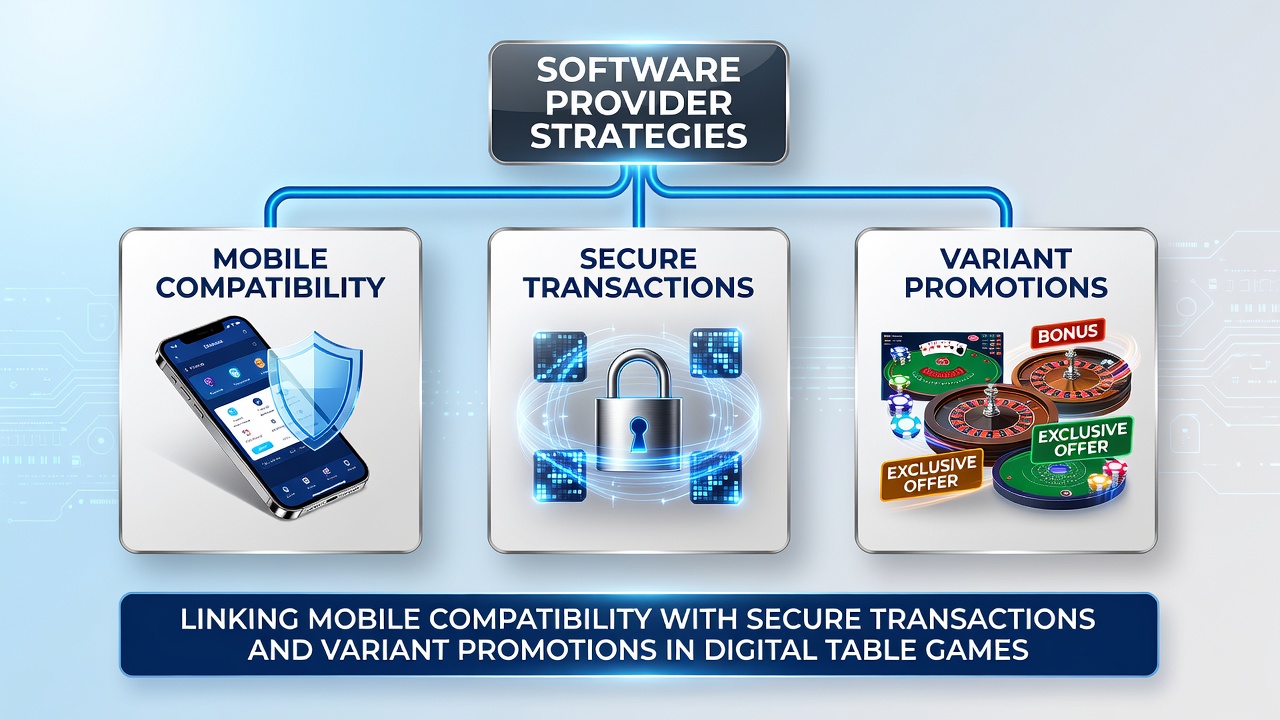
Software providers in the digital table games sector have developed integrated approaches that tie mobile platform compatibility directly to secure transaction systems and targeted promotional variants, creating unified frameworks that support player access across devices while maintaining compliance standards. These strategies emerged as operators expanded their offerings in blackjack, baccarat, and poker derivatives through 2025 and into August 2026, when multiple jurisdictions reported increased mobile engagement metrics.
Mobile Compatibility as the Foundation for Transaction Security
Developers prioritize responsive design elements that function consistently on smartphones and tablets, embedding encryption protocols at the code level so that transaction flows remain protected during gameplay sessions. Companies such as those supplying content to North American and European markets have incorporated biometric authentication alongside traditional login methods, which allows seamless payment processing without interrupting game flow. Data from regulatory filings shows that these combined features reduce session drop-off rates when players move between deposit options and live table interfaces.
Integration often begins with API frameworks that link device detection software to payment gateways certified under standards from bodies like the Malta Gaming Authority. This setup ensures that variant-specific promotions, such as bonus rounds tied to certain table game versions, activate only after secure verification steps complete on mobile devices. Observers note that providers test these connections extensively in controlled environments before deployment to meet requirements in multiple regions.
Linking Variant Promotions to Secure Mobile Transactions
Promotional structures for digital table game variants now frequently incorporate conditional triggers based on transaction history and device compatibility. For instance, software teams design bonus multipliers for poker variants or baccarat side bets that unlock following verified mobile deposits processed through token-based systems. These mechanics encourage repeated engagement while routing all financial activity through encrypted channels that comply with regional data protection rules.
One documented approach involves modular promotion engines that adjust offer parameters according to detected mobile operating systems and connection types, ensuring promotions remain accessible without compromising security layers. Figures from industry reports indicate that operators using these tools saw higher redemption rates for variant-specific incentives during the first half of 2026, particularly in markets where mobile usage exceeds desktop activity.

Regional Adaptations and Provider Case Examples
Providers adjust their strategies according to licensing jurisdictions, with Canadian operators often requiring additional layers for interprovincial transaction handling that integrate smoothly with mobile apps. Similar patterns appear in Australian markets where software must align with local financial reporting standards while supporting promotional variants that differ by state regulations. Those adaptations frequently rely on centralized dashboards that let operators monitor compatibility metrics alongside transaction security logs in real time.
Take the example of a major content supplier that partnered with an operator in Nevada during early 2026 to roll out table game variants featuring location-aware promotions. The system verifies mobile compatibility before applying secure payment confirmations and then releases variant bonuses tied to specific game modes. Research from the American Gaming Association highlights how such integrated tools have supported steady revenue growth in digital table segments without reported security incidents in that period.
Technical Mechanisms Driving These Connections
Behind the scenes, providers employ containerized microservices that separate mobile rendering functions from payment processing modules, yet connect them through secure token exchanges. This architecture supports rapid updates to game variants while keeping transaction data isolated and auditable. Encryption standards evolve alongside device capabilities, with providers incorporating post-quantum resistant algorithms in select deployments by August 2026 to future-proof mobile transaction pathways.
Variant promotions gain flexibility through rule-based engines that reference both device data and transaction verification status before activation. Developers document these processes in technical white papers shared with operators, showing how conditional logic prevents unauthorized access while delivering tailored incentives across different table game formats. External validation from groups such as the International Association of Gaming Regulators confirms that these methods align with emerging best practices in several jurisdictions.
Conclusion
Software providers continue refining the linkages among mobile compatibility, secure transactions, and variant promotions as digital table games expand into new markets through 2026. These efforts rely on technical integrations that prioritize compliance and operational efficiency, resulting in systems where each component reinforces the others without introducing friction for players or operators. Ongoing adaptations reflect responses to regulatory shifts and device advancements rather than isolated innovations.