Tracing Roulette Game Accessibility Through Device Compatibility Layers in Emerging Digital Markets
Written by Mara Simon · Jul 20, 2026

Tracing Roulette Game Accessibility Through Device Compatibility Layers in Emerging Digital Markets
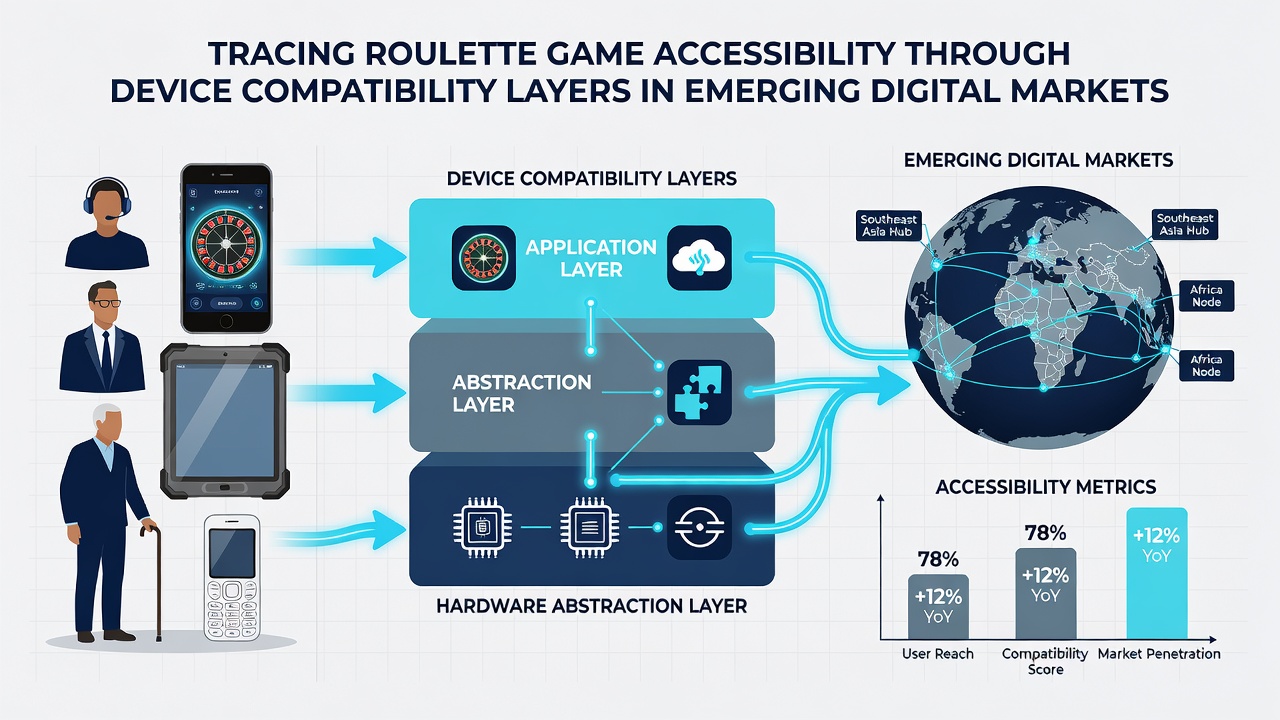
Device compatibility layers serve as intermediate software frameworks that translate roulette game code across operating systems and hardware profiles common in emerging digital markets. These layers handle rendering adjustments for screens ranging from basic Android devices to newer tablets while maintaining consistent gameplay mechanics such as wheel physics and bet placement interfaces. Research indicates that markets in Southeast Asia and Latin America rely heavily on such layers because of fragmented device ecosystems where users access platforms through older chipsets and variable network conditions.
Core Components of Compatibility Frameworks
Developers implement compatibility layers using technologies like WebAssembly for browser-based execution and containerized wrappers that abstract graphics APIs. These tools detect device specifications at runtime then apply scaling protocols for resolution and input methods. Data from industry reports shows that adoption rates for HTML5-driven roulette titles increased by 28 percent in mobile-heavy regions between 2024 and 2026 because layers reduced the need for separate native builds.
Observers note that cloud-streaming elements within certain layers offload processing to remote servers which allows low-end hardware in rural areas to display smooth animations without local GPU strain. Yet performance still depends on stable connections so operators integrate adaptive bitrate adjustments that maintain accessibility even during peak usage periods.
Market Dynamics in Key Emerging Regions
Emerging digital markets present distinct device distributions where budget smartphones dominate user bases in countries across Africa and South Asia. Compatibility layers address this by supporting legacy Android versions down to API level 21 and incorporating fallback rendering paths for devices lacking advanced graphics support. Figures reveal that roulette sessions via adapted layers accounted for over 40 percent of total playtime in monitored platforms operating in Brazil and Indonesia during the first half of 2026.
Regional Regulatory Influences
Government frameworks shape how these layers integrate with licensed platforms. In Singapore the Casino Regulatory Authority oversees technical standards that require compatibility testing across specified device categories before market entry. Similar guidelines appear in Australian oversight documents which emphasize accessibility metrics for interactive gaming products. One study from the University of Nevada Las Vegas gaming research division documented how such requirements encouraged wider deployment of multi-layer architectures that preserve game integrity while expanding reach.
Technical Implementation Patterns Observed in 2026
By July 2026 several operators had rolled out updated layer versions that incorporate machine learning modules for predicting device-specific rendering issues before they affect live sessions. These modules analyze telemetry from thousands of concurrent connections and adjust shader parameters accordingly. And developers report reduced crash rates on entry-level devices after deploying such predictive systems.
Payment integration also factors into compatibility because layers must interface with regional mobile wallet APIs without introducing additional latency. Markets in Kenya and Colombia demonstrate higher retention when roulette interfaces align with local device payment flows through unified compatibility protocols.
Challenges Addressed by Layered Approaches
Network variability remains a primary hurdle yet layers mitigate it through progressive loading sequences that prioritize core roulette elements like the betting grid before secondary visuals. Security protocols embedded in these frameworks undergo regular audits to prevent exploits that could compromise user sessions across borders. Evidence suggests that standardized testing suites now cover more than 150 device models common in target markets which streamlines approval processes for new game variants.
What's notable is how these layers enable cross-border content sharing while respecting jurisdictional rules on game presentation and payout structures. Operators coordinate with regional partners to certify each adapted build which maintains compliance without duplicating development efforts.
Conclusion
Device compatibility layers continue to expand roulette game reach in emerging digital markets by bridging hardware differences and regulatory expectations. Metrics collected through mid-2026 demonstrate sustained growth in accessible sessions across multiple regions as frameworks evolve to handle new device releases and connectivity patterns. Ongoing technical refinements ensure that core gameplay elements remain consistent regardless of the underlying hardware profile.